Sauce
Pizza sauce from whole tomatoes.
Most of the pizzas on this site start with a can of whole peeled tomatoes. One version is crushed and left raw. One is simmered. A third is a garlic-cream sauce for a white pizza.
A pizza sauce recipe does not need a long ingredient list. Whole peeled tomatoes already contain the juice, the body, and the seeds. Crushing them by hand leaves pieces that cook on the pizza instead of soaking the dough the way a watery puree can. Salt is doing the seasoning. Oil carries the tomato flavor and keeps the sauce from baking into a dry patch.
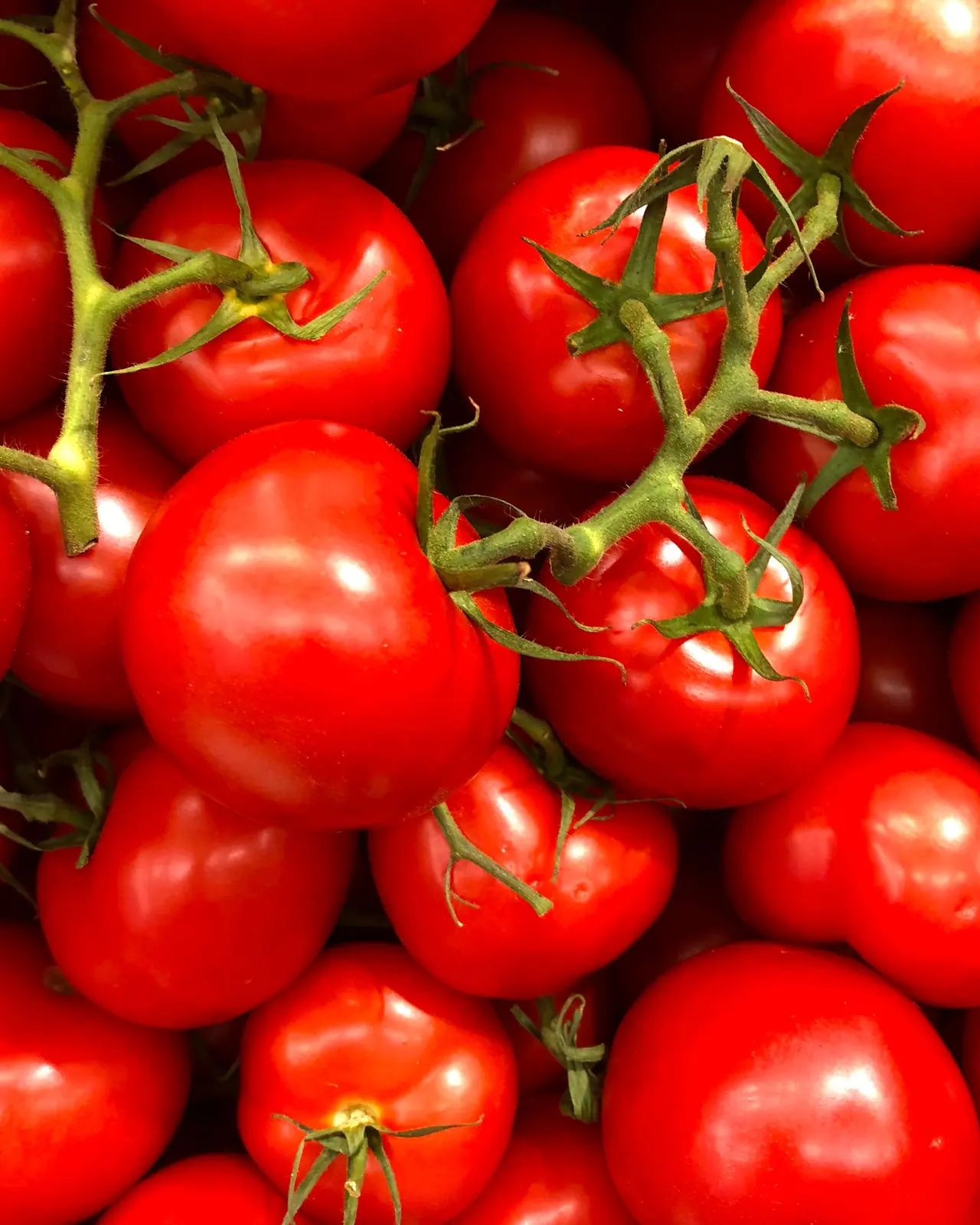
Canned tomatoes are the practical choice for a consistent sauce in the United States, including outside tomato season. Fresh tomatoes can be used if they are ripe and you salt them the same way, but they are often more watery, so drain the thin liquid after crushing and before you measure toward the 150 to 180 grams that goes on a pie.
Crushed tomato pizza sauce
An uncooked sauce of whole peeled tomatoes, salt, olive oil, and basil for about four pizzas.
Ingredients
Eight grams of fine sea salt is about 1 1/3 teaspoons. Fifteen grams of oil is about 1 tablespoon.
- 794 g whole peeled tomatoes, juices included (one 28-ounce can)
- 8 g fine sea salt
- 15 g extra-virgin olive oil
- 6 leaves fresh basil
- 1 clove, smashed, optional, and removed before serving
Equipment
- Can opener
- Mixing bowl
- Digital scale
Method
- Empty the 794 g of tomatoes and their juices into a bowl. Crush them by hand until the pieces are small but the sauce is not a smooth puree.
- Stir in 8 g fine sea salt, 15 g extra-virgin olive oil, and the 6 leaves, torn.
- For a mild garlic note, add 1 clove, smashed, wait 10 minutes, and remove it.
- Spread about 150 to 180 g on a 12-inch pizza. Refrigerate the rest.
Why this one stays uncooked
On a hot pizza, the tomato cooks in the oven. Cooking it first concentrates it, which is useful for a New York slice that bakes a bit longer and carries more cheese. For a Margherita or a Neapolitan pie, the raw crush stays brighter. Do not add a pile of dried herbs to this version. The basil goes in fresh, and more basil can go on after the bake.
Simmered pizza sauce
A cooked tomato sauce with garlic and oregano for New York-style pizzas.
Ingredients
- 794 g whole peeled tomatoes, juices included
- 20 g olive oil
- 8 g garlic (about 2 cloves), sliced
- 2 g dried oregano
- 6 g fine sea salt
- 2 g sugar, only if a taste is harshly acidic
Equipment
- Saucepan
- Wooden spoon
- Digital scale
Method
- Warm 20 g olive oil in a saucepan over medium-low heat. Add 8 g sliced garlic and cook 1 minute without letting it brown deeply.
- Add 794 g tomatoes, crushed by hand, plus 2 g dried oregano and 6 g fine sea salt.
- Simmer uncovered for 30 minutes, stirring every few minutes, until the sauce coats a spoon. Stir in 2 g sugar only if a taste is harshly acidic.
- Cool the sauce before it goes on dough. Use about 110 to 150 g on one pizza.
Sugar, garlic, and how much to spread
Sugar is not a default. It is there for a can that tastes sharply acidic after 30 minutes of simmering. Two grams is about half a teaspoon. If the sauce already tastes round, leave it out so the pizza does not taste candied.
Too much sauce is the usual reason a center will not crisp. The ranges above, 150 to 180 grams of the raw sauce or 110 to 150 grams of the simmered sauce, are for a pizza about 12 to 14 inches across. Leave a rim bare so the edge can dry.
White garlic pizza sauce
A small batch of garlic béchamel for two white pizzas.
Ingredients
- 20 g unsalted butter
- 15 g olive oil
- 8 g garlic, minced (about 2 cloves)
- 15 g all-purpose flour
- 300 g whole milk
- 2 g fine sea salt
- 1 g ground black pepper
- 20 g finely grated Parmesan, optional
Equipment
- Small saucepan
- Whisk
- Digital scale
Method
- Melt 20 g butter with 15 g olive oil over medium-low heat. Add 8 g minced garlic and cook 30 seconds.
- Stir in 15 g flour and cook 60 seconds.
- Whisk in 300 g whole milk a little at a time. Simmer, whisking, until the sauce coats a spoon, about 4 minutes.
- Take the pan off the heat. Stir in 2 g salt, 1 g black pepper, and 20 g Parmesan if you are using it. The garlic, flour, and simmer together take about 8 minutes.
Storage
U.S. food-safety guidance is to refrigerate perishable cooked pizza, sauce, and cheese within 2 hours, or within 1 hour if the room is warmer than 90°F (32°C). Reheat leftovers until they reach 165°F (74°C). Raw flour is not a ready-to-eat food, so do not taste unbaked dough. The tomato sauces keep up to 4 days in the refrigerator and about 2 months in the freezer. The white sauce is best within 3 days and should be stirred while it is reheated, because the flour can set up as it cools. Thaw frozen sauce in the refrigerator, not on the counter.
Common questions
Do I have to use San Marzano tomatoes?
No. Any canned whole peeled tomatoes you like will work if you salt to the weights above. San Marzano tomatoes are often less acidic, which is why the simmered sauce treats sugar as optional rather than required. Taste before you add it.
Can I start from tomato paste?
Yes, when you cannot get whole peeled tomatoes. Whisk 70 g tomato paste into 240 g water, then add 4 g salt and 8 g olive oil. That is a smaller, sharper batch, about enough for two pizzas, and it will not taste the same as crushed whole tomatoes. Do not use it as a one-for-one swap for the 794 g can in the recipes above.
Which sauce goes on which pizza?
The uncooked crush is the sauce for Margherita and Neapolitan pizzas on this site. The simmered sauce is the one in the New York and pepperoni recipes. The white sauce is for a pizza that has no tomato at all.
How long does the sauce keep?
Refrigerate it within 2 hours. Use the tomato sauces within 4 days, or freeze them for up to 2 months. The white sauce is best within 3 days. Reheat leftovers to 165°F (74°C).