Recipe
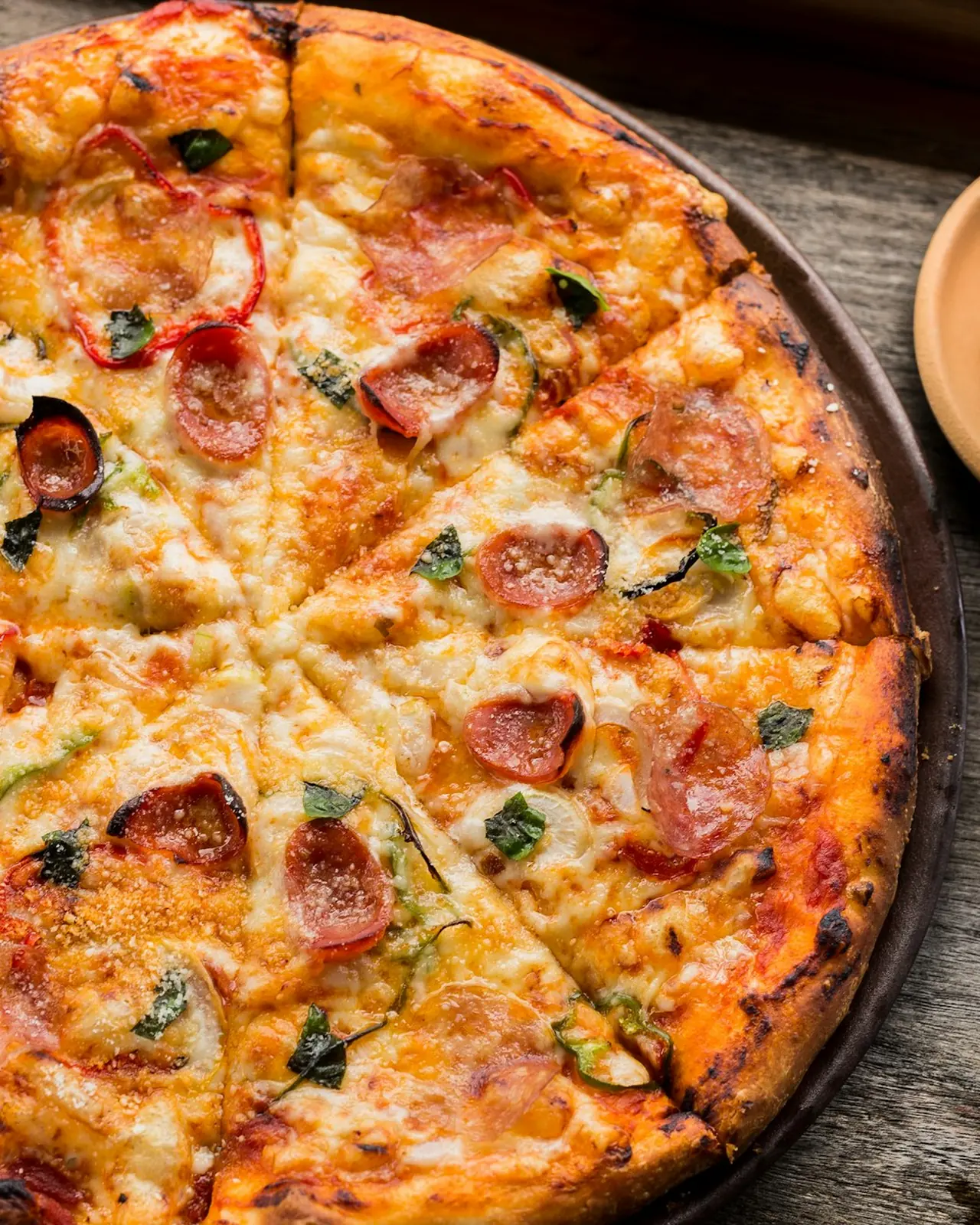
Pepperoni pizza.
A same-day dough in the New York style, a sauce simmered for 15 minutes, and a single layer of pepperoni. One pizza, about 12 inches.
Pepperoni renders fat as it heats. That fat is part of the flavor, and it is also why the cheese and the amount of sauce matter. Low-moisture mozzarella browns instead of puddling. The simmered sauce is thick enough that the center can dry under the toppings during a 10-minute bake. A raw, loose tomato sauce tends to leave a wet stripe under the cheese.
The dough is 62 percent hydration, with oil at about 3 percent and sugar at 2 percent of the flour weight. Those are the same ideas as the New York dough, on a clock that fits one evening. For two cold-fermented pies, use that page and add pepperoni there if you want it.
Recipe
One pepperoni pizza with a same-day New York-style dough, a short simmered sauce, and low-moisture mozzarella.
Dough
- 250 g bread flour
- 155 g water, cool
- 5 g fine sea salt
- 5 g sugar
- 8 g olive oil
- 2 g instant yeast
Sauce
The simmer makes a little more than the pizza needs. Use 110 g on the pie.
- 200 g crushed whole peeled tomatoes
- 8 g olive oil
- 4 g garlic (1 clove), minced
- 1 g dried oregano
- 2 g fine sea salt
Topping
- 110 g of the simmered sauce
- 120 g low-moisture whole-milk mozzarella, shredded
- 55 g pepperoni, sliced
Equipment
- Digital scale
- Small saucepan
- Baking steel or stone
- Peel or parchment
Method
- Stir 5 g salt, 5 g sugar, and 2 g instant yeast into 250 g bread flour. Add 155 g cool water and 8 g olive oil. Mix until no dry flour remains.
- Cover 20 minutes, fold the dough once from all four sides, shape a ball, and rest it 70 minutes at room temperature.
- Warm 8 g olive oil with 4 g garlic for 30 seconds. Add 200 g crushed tomatoes, 1 g oregano, and 2 g salt. Simmer 15 minutes. You will spread 110 g on the pizza.
- Heat a baking steel for 45 minutes at 500°F (260°C). Heat a stone for 60 minutes.
- Shape the dough to about 12 inches. Spread 110 g sauce, 120 g mozzarella, and 55 g pepperoni in a single layer.
- Bake about 10 minutes. On parchment, bake 4 minutes, remove the parchment, and bake about 6 minutes more. Rest 2 minutes, then slice.
What the bake is doing
Five hundred degrees Fahrenheit (260°C) is lower than the Margherita bake because the sugar and oil brown faster. If the rim is close to black at 8 minutes, take the pizza out even if you planned on 10. If the bottom is still pale at 10 minutes, the steel was not fully heated. The next pizza from a hotter steel will move faster, so check it early.
Cupped pepperoni is mostly a function of the slice: a smaller, drier cup edges more readily than a large, soft slice. This recipe does not depend on a particular brand. Overlap the slices in one layer so every piece touches the heat.
Storage
U.S. food-safety guidance is to refrigerate perishable cooked pizza, sauce, and cheese within 2 hours, or within 1 hour if the room is warmer than 90°F (32°C). Reheat leftovers until they reach 165°F (74°C). Raw flour is not a ready-to-eat food, so do not taste unbaked dough. Refrigerate leftover pizza and the unused sauce within that window. The pizza keeps 3 to 4 days. The extra sauce keeps up to 4 days. Reheat pizza in a skillet or a 375°F (190°C) oven to 165°F (74°C). A crowded microwave softens the pepperoni and the crust together.
Common questions
Why not use the uncooked sauce?
This dough bakes at 500°F for about 10 minutes under a layer of cheese and pepperoni. A short simmer thickens the tomato so the center is less likely to stay wet. The uncooked sauce is a better match for the Margherita and Neapolitan recipes.
Should the pepperoni go under the cheese?
On this pizza it goes on top of the cheese, in one layer, so the edges can crisp. Fifty-five grams is about 20 to 24 standard slices. A second layer steams the cheese instead of browning it.
How is this different from the New York recipe?
The New York page uses less yeast and a 24-hour cold ferment, and it makes two larger pies. This page is the same family of dough, bread flour, oil, and a little sugar, arranged so one pepperoni pizza can be baked the same day.